Circularity is possible: Unlock the next frontier with business model innovation
Catch up on November's CognosisLive panel discussion that covered the challenges and opportunities for linear businesses in a brave new circular world.
From recycling to reimagining
Humanity is currently using resources 1.7 times faster than our planet's ecosystems can regenerate – a voracious rate of consumption that is clearly unsustainable. To reset this imbalance, business will need to play an outsized role. Indeed, the shift to circular business models is likely to become the biggest single corporate transformation in the next 30 years.
To date, corporate efforts have largely focused on reducing waste, reducing input resources and recycling. So, how do companies start transforming and innovating their business models to thrive in a circular marketplace?
In our latest CognosisLive online panel discussion, Director Duncan Campbell put this question to three industry experts who have considerable experience at pioneering circular change.
Expert perspective on a tough business challenge
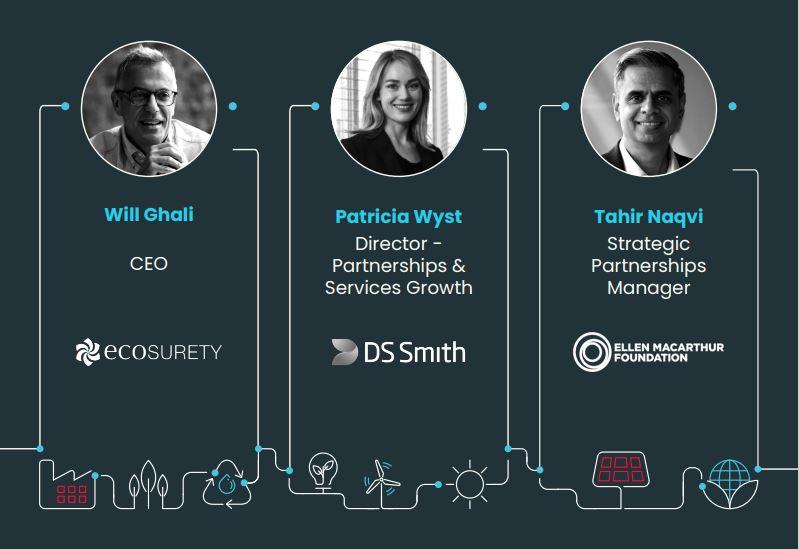
- Will Ghali is CEO of Ecosurety, a packaging compliance scheme with a clear purpose to accelerate change towards an environmentally and socially sustainable world. Will worked for several decades as a frontline marketer for leading FMCG brands such as PepsiCo and Unilever.
- Patricia Wyst, head of partnerships at the leading packaging firm DS Smith, operates at the sharp end of corporate innovation in a FTSE 100 company. Her focus is on the development, manufacturing and recycling for sustainable fibre-based packaging.
- Tahir Naqui is Strategic Partnerships Manager at the Ellen MacArthur Foundation, a pioneering voice on circularity, which offers thought leadership and practical guidance on how to eliminate waste and pollution, circulate products and materials (at their highest value), and regenerate nature.
Discussion highlights
Many business leaders are concerned about the commercial viability of circular innovation. How do you overcome that perception? [10 mins]
Patricia: Our approach is to go step by step, improving incrementally to see how new business models work. We work closely with partners and also gain sponsorship from a really senior level in the business.
Tahir: We provide thought leadership, sharing research, insights and analysis that create a business case for the circular economy and give confidence to businesses and also policy makers to move in the right direction.
Making circular systems work will take a step change in the way we think about partnerships. What evidence have you seen in the marketplace? [17 mins]
Will: I used to work for PepsiCo, and Coke were the enemy. I used to work for Unilever and, of course, Proctor & Gamble were the enemy. But I am hearing that competitor brands are prepared to collaborate in the sustainability packaging space, which is encouraging.
What are the business model innovations that are getting you excited at the moment? Which new circular propositions have real potential for the future? [21 mins]
Tahir: The move from ownership to access is the model that will be required in a lot of industries. Also, companies need to focus on the customer, not the products, to know what kind of service they need to provide.
Patricia: There are a lot of innovations that rely on consumer behaviour change. How can we meet customers and consumers where they are today? We are piloting trials that don’t force people to completely adapt their behaviour in order to do the right thing with their packaging.
How do you get consumers or customers to change their behaviour towards more circular practices? [29 mins]
Will: Firstly, a more circular system has to be no less convenient – and ideally more convenient – because consumers are busy. Secondly, they won’t pay a premium to do the right thing. So you need to make it cost neutral decision.
Tahir: I totally agree: it's about cost and convenience. In an ideal world, the consumer will not have any bad choices.
Patricia: There's already a lot of people who order three sizes of clothes and then send two back. That’s an existing behaviour that you capitalise on by offering reusable packaging, as customers are going to be using it anyway.
In the near term, what is top of the agenda for not-for-profits to accelerate take-up of circular practices? [33 mins]
Tahir: Today, the concept of circular economy is well understood, and it's quite popular. We now need to move from ambition to action. We need to shift through the gears and help our partners with the right tools and techniques and get into the nitty-gritty of implementation.
What advice would you give to businesses starting out on their circular journey? [41 mins]
Patricia: It's incredibly hard to create momentum out of nothing, so you’re better to push on something that already has some. Getting the right team is incredibly important. When you're trying to do something really ambitious, when you're trying to lead your industry, ‘good enough’ is not enough. You need people that can drive credibility, excitement and positivity in the business.
Will: First, know your data, as that enables better decisions. Second, collaborate. Talk to your supply chain and even your competitors. Lastly, be bold. Do something rather than nothing. Consumers are ready to make the right choices, and they just need that nudge.
Tahir: Make it core to your strategy, because if it is not, then it will be just a pilot and it might fizzle out. It can’t be something your sustainability team is doing on the side. It needs to be a systems change. You have to involve your whole value chain.
The uncomfortable truth about circularity
The uncomfortable truth about circularity is that most businesses are built to operate in a linear way. Senior executives therefore face a dilemma. They know that circular business models are the way forward in the long term. But, deep down, they may feel that any attempt to drive meaningful circular change could pose huge short-term risks to their core business.
Despite this terrifying challenge, those who are able to pioneer and move first will gain competitive advantage, which will only increase over time.
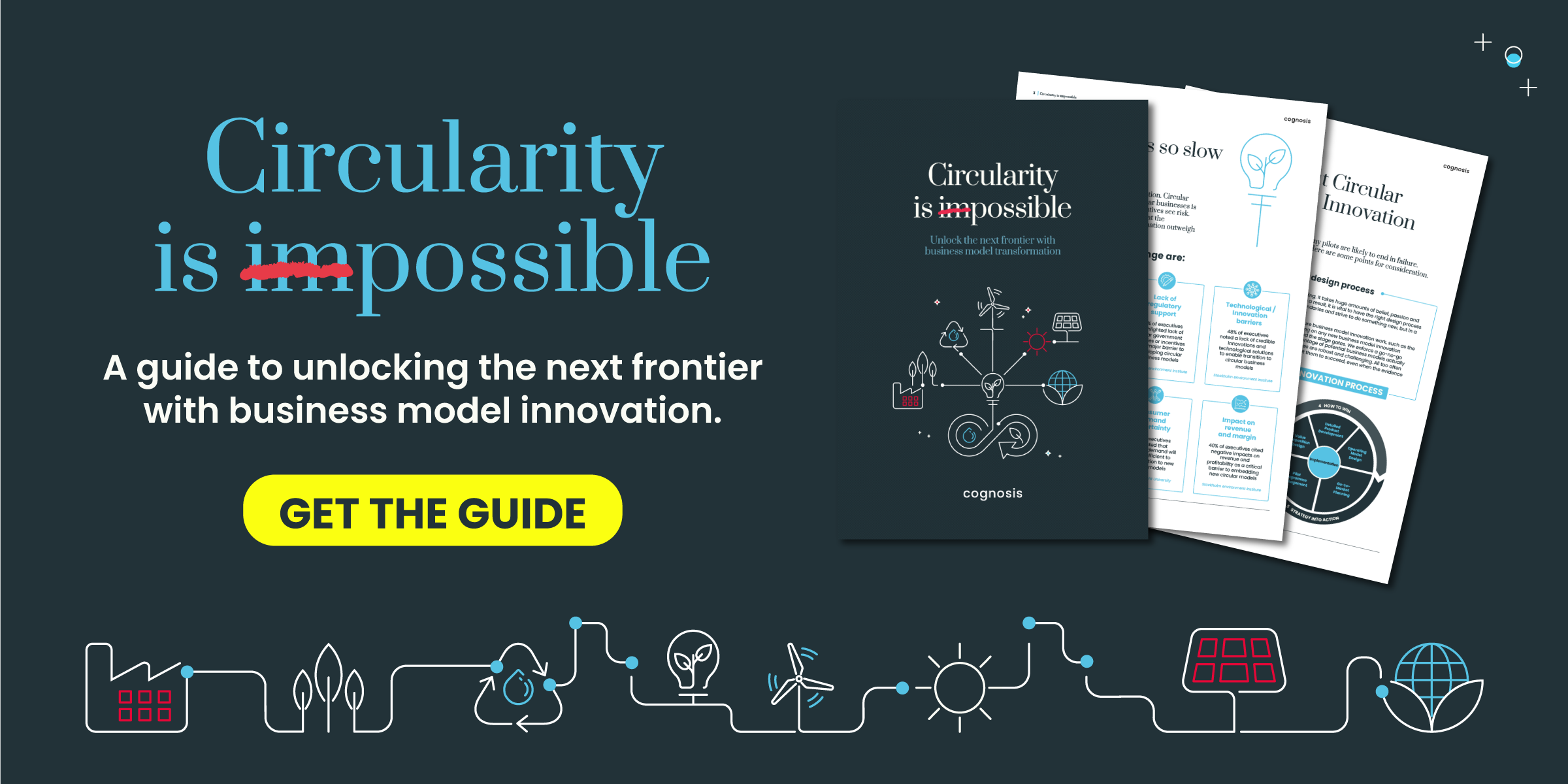
For businesses that are struggling to address the challenge of circularity, as many are, our latest guide on the subject provides some simple steps to get the foundations in place and begin the conversation about circular business model innovation.